By Olin Coles
It’s no secret that PC gamers who seek realistic graphics prefer their desktop platform over the 1080p-limited console counterparts. Discrete graphics cards, the hardware added onto motherboards built for high performance, support enthusiast video resolutions as large as 2560×1600. More pixels means more power needed to produce them, so I decided to test some of the most recent graphics cards from NVIDIA and AMD on our massive 30″ monitor. In this article Benchmark Reviews tests frame rate performance for the AMD Radeon R9 290X and NVIDIA GeForce GTX 780 Ti at their maximum supported resolution.
GeForce GTX 780 Ti and Radeon R9 290X are the two latest product offerings on graphics market. Each video card occupies its own price point, so while the manufacturer’s might have launched their product to compete against another, market factors have pushed them into their own unique space. Additionally, some of the previously released graphics solutions still compete for shelf space:
- Radeon R9 270X: starting at $199.99 (Amazon | Newegg)
- Radeon HD 7950: starting at $249.99 (Amazon | Newegg)
- GeForce GTX 770: starting at $329.99 (Amazon | Newegg)
- Radeon HD 7970: starting at $329.99 (Amazon | Newegg)
- GeForce GTX 780: starting at $499.99 (Amazon | Newegg)
- Radeon R9 290X: starting at $579.99 (Amazon | Newegg)
- GeForce GTX 780 Ti: starting at $699.99 (Amazon | Newegg)
The Microsoft DirectX-11 graphics API is native to the Microsoft Windows 7 Operating System, and will be the primary O/S for our test platform. DX11 is also available as a Microsoft Update for the Windows Vista O/S, so our test results apply to both versions of the Operating System.
In each benchmark test there is one ‘cache run’ that is conducted, followed by five recorded test runs. Results are collected at each setting with the highest and lowest results discarded. The remaining three results are averaged, and displayed in the performance charts on the following pages.
A combination of synthetic and video game benchmark tests have been used in this article to illustrate relative performance among graphics solutions. Our benchmark frame rate results are not intended to represent real-world graphics performance, as this experience would change based on supporting hardware and the perception of individuals playing the video game.
- Motherboard: ASUS P9X79 Deluxe (Intel X79 Express)
- Processor: Intel Core i7-3960X Extreme Edition (six cores/3300 MHz)
- System Memory: 32GB G.SKILL Ripjaws-Z DDR3-1600 RAM
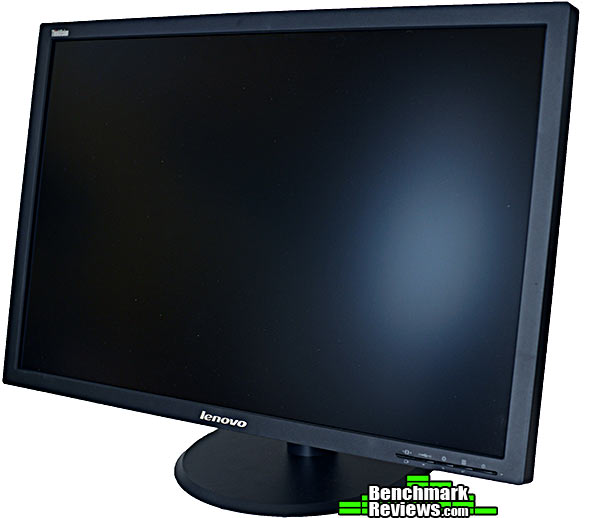
- Monitor: Lenovo ThinkVision LT3053p IPS LED-Backlit LCD 30″ Monitor
- Battlefield 3
- Settings: 2560×1600 Resolution, Ultra Graphics Quality, FOV 90, 180-second Fraps Scene
- Metro 2033 Benchmark
- Settings: 2560×1600 Resolution, Very-High Quality, 4x AA, 16x AF, Tessellation, PhysX Disabled
- Unigine Heaven Benchmark 3.0
- Settings: 2560×1600 Resolution, DirectX 11, High Quality, Extreme Tessellation, 16x AF, 4x AA
- Battlefield 4
- Settings: 2560×1600 Resolution, Ultra Graphics Quality, FOV 70, 180-second Fraps Scene
| Graphics Card | Radeon R9 270X | Radeon HD7950 | GeForce GTX770 | Radeon HD7970 | GeForce GTX780 | Radeon R9 290X | GeForce GTX780Ti |
| GPU Cores | 1280 | 1792 | 1536 | 2048 | 2304 | 2816 | 2880 |
| Core Clock (MHz) | 1030 | 850 | 1046 | 925 | 863 | 1000 | 876 |
| Shader Clock (MHz) | 1120 Boost | N/A | 1085 Boost | N/A | Boost 902 | N/A | Boost 928 |
| Memory Clock (MHz) | 1400 | 1250 | 1753 | 1375 | 1502 | 1250 | 1750 |
| Memory Amount | 2048MB GDDR5 | 3072MB GDDR5 | 2048MB GDDR5 | 3072MB GDDR5 | 3072MB GDDR5 | 4096MB GDDR5 | 3072MB GDDR5 |
| Memory Interface | 256-bit | 384-bit | 256-bit | 384-bit | 384-bit | 512-bit | 384-bit |
- Sapphire Radeon R9 270X (1050 MHz GPU/1100 MHz Boost/1450 MHz vRAM – AMD Catalyst 13.11 Beta v8)
- AMD Radeon HD 7950 (850 MHz GPU/1250 MHz vRAM – AMD Catalyst 13.9)
- NVIDIA GeForce GTX 770 (1046 MHz GPU/1085 MHz Boost/1753 MHz vRAM – Forceware 320.18)
- AMD Radeon HD 7970 (925 MHz GPU/1375 MHz vRAM – AMD Catalyst Catalyst 13.11 Beta v8)
- NVIDIA GeForce GTX 780 (869 MHz GPU/902 MHz Boost/1502 MHz vRAM – Forceware 331.70)
- MSI Radeon R9 290X (1000 MHz GPU/1250 MHz vRAM – AMD Catalyst 13.11 Beta v8)
- NVIDIA GeForce GTX 780 Ti (875 MHz GPU/928 MHz Boost/1750 MHz vRAM – Forceware 331.70)
In Battlefield 3, players step into the role of the Elite U.S. Marines. As the first boots on the ground, players will experience heart-pounding missions across diverse locations including Paris, Tehran and New York. As a U.S. Marine in the field, periods of tension and anticipation are punctuated by moments of complete chaos. As bullets whiz by, walls crumble, and explosions force players to the grounds, the battlefield feels more alive and interactive than ever before.
The graphics engine behind Battlefield 3 is called Frostbite 2, which delivers realistic global illumination lighting along with dynamic destructible environments. The game uses a hardware terrain tessellation method that allows a high number of detailed triangles to be rendered entirely on the GPU when near the terrain. This allows for a very low memory footprint and relies on the GPU alone to expand the low res data to highly realistic detail.
Using Fraps to record frame rates, our Battlefield 3 benchmark test uses a three-minute capture on the ‘Secure Parking Lot’ stage of Operation Swordbreaker. Relative to the online multiplayer action, these frame rate results are nearly identical to daytime maps with the same video settings.
- BattleField 3
- Settings: 2560×1600 Resolution, Ultra Graphics Quality, FOV 90, 180-second Fraps Scene

Battlefield 3 Benchmark Test Results
| Graphics Card | Radeon R9 270X | Radeon HD7950 | GeForce GTX770 | Radeon HD7970 | GeForce GTX780 | Radeon R9 290X | GeForce GTX780Ti |
| GPU Cores | 1280 | 1792 | 1536 | 2048 | 2304 | 2816 | 2880 |
| Core Clock (MHz) | 1030 | 850 | 1046 | 925 | 863 | 1000 | 876 |
| Shader Clock (MHz) | 1120 Boost | N/A | 1085 Boost | N/A | Boost 902 | N/A | Boost 928 |
| Memory Clock (MHz) | 1400 | 1250 | 1753 | 1375 | 1502 | 1250 | 1750 |
| Memory Amount | 2048MB GDDR5 | 3072MB GDDR5 | 2048MB GDDR5 | 3072MB GDDR5 | 3072MB GDDR5 | 4096MB GDDR5 | 3072MB GDDR5 |
| Memory Interface | 256-bit | 384-bit | 256-bit | 384-bit | 384-bit | 512-bit | 384-bit |
Metro 2033 is an action-oriented video game with a combination of survival horror, and first-person shooter elements. The game is based on the novel Metro 2033 by Russian author Dmitry Glukhovsky. It was developed by 4A Games in Ukraine and released in March 2010 for Microsoft Windows. Metro 2033 uses the 4A game engine, developed by 4A Games. The 4A Engine supports DirectX-9, 10, and 11, along with NVIDIA PhysX and GeForce 3D Vision.
The 4A engine is multi-threaded in such that only PhysX had a dedicated thread, and uses a task-model without any pre-conditioning or pre/post-synchronizing, allowing tasks to be done in parallel. The 4A game engine can utilize a deferred shading pipeline, and uses tessellation for greater performance, and also has HDR (complete with blue shift), real-time reflections, color correction, film grain and noise, and the engine also supports multi-core rendering.
Metro 2033 featured superior volumetric fog, double PhysX precision, object blur, sub-surface scattering for skin shaders, parallax mapping on all surfaces and greater geometric detail with a less aggressive LODs. Using PhysX, the engine uses many features such as destructible environments, and cloth and water simulations, and particles that can be fully affected by environmental factors.
NVIDIA has been diligently working to promote Metro 2033, and for good reason: it’s one of the most demanding PC video games we’ve ever tested. When their flagship GeForce GTX 480 struggles to produce 27 FPS with DirectX-11 anti-aliasing turned two to its lowest setting, you know that only the strongest graphics processors will generate playable frame rates. All of our tests enable Advanced Depth of Field and Tessellation effects, but disable advanced PhysX options.
- Metro 2033 Benchmark
- Settings: 2560×1600 Resolution, Very-High Quality, 4x AA, 16x AF, Tessellation, PhysX Disabled

Metro 2033 Benchmark Test Results
| Graphics Card | Radeon R9 270X | Radeon HD7950 | GeForce GTX770 | Radeon HD7970 | GeForce GTX780 | Radeon R9 290X | GeForce GTX780Ti |
| GPU Cores | 1280 | 1792 | 1536 | 2048 | 2304 | 2816 | 2880 |
| Core Clock (MHz) | 1030 | 850 | 1046 | 925 | 863 | 1000 | 876 |
| Shader Clock (MHz) | 1120 Boost | N/A | 1085 Boost | N/A | Boost 902 | N/A | Boost 928 |
| Memory Clock (MHz) | 1400 | 1250 | 1753 | 1375 | 1502 | 1250 | 1750 |
| Memory Amount | 2048MB GDDR5 | 3072MB GDDR5 | 2048MB GDDR5 | 3072MB GDDR5 | 3072MB GDDR5 | 4096MB GDDR5 | 3072MB GDDR5 |
| Memory Interface | 256-bit | 384-bit | 256-bit | 384-bit | 384-bit | 512-bit | 384-bit |
The Unigine Heaven benchmark is a free publicly available tool that grants the power to unleash the graphics capabilities in DirectX-11 for Windows 7 or updated Vista Operating Systems. It reveals the enchanting magic of floating islands with a tiny village hidden in the cloudy skies. With the interactive mode, emerging experience of exploring the intricate world is within reach. Through its advanced renderer, Unigine is one of the first to set precedence in showcasing the art assets with tessellation, bringing compelling visual finesse, utilizing the technology to the full extend and exhibiting the possibilities of enriching 3D gaming.
The distinguishing feature in the Unigine Heaven benchmark is a hardware tessellation that is a scalable technology aimed for automatic subdivision of polygons into smaller and finer pieces, so that developers can gain a more detailed look of their games almost free of charge in terms of performance. Thanks to this procedure, the elaboration of the rendered image finally approaches the boundary of veridical visual perception: the virtual reality transcends conjured by your hand.
Since only DX11-compliant video cards will properly test on the Heaven benchmark, only those products that meet the requirements have been included.
- Unigine Heaven Benchmark 3.0
- Settings: 2560×1600 Resolution, DirectX 11, High Quality, Extreme Tessellation, 16x AF, 4x AA

Heaven Benchmark Test Results
| Graphics Card | Radeon R9 270X | Radeon HD7950 | GeForce GTX770 | Radeon HD7970 | GeForce GTX780 | Radeon R9 290X | GeForce GTX780Ti |
| GPU Cores | 1280 | 1792 | 1536 | 2048 | 2304 | 2816 | 2880 |
| Core Clock (MHz) | 1030 | 850 | 1046 | 925 | 863 | 1000 | 876 |
| Shader Clock (MHz) | 1120 Boost | N/A | 1085 Boost | N/A | Boost 902 | N/A | Boost 928 |
| Memory Clock (MHz) | 1400 | 1250 | 1753 | 1375 | 1502 | 1250 | 1750 |
| Memory Amount | 2048MB GDDR5 | 3072MB GDDR5 | 2048MB GDDR5 | 3072MB GDDR5 | 3072MB GDDR5 | 4096MB GDDR5 | 3072MB GDDR5 |
| Memory Interface | 256-bit | 384-bit | 256-bit | 384-bit | 384-bit | 512-bit | 384-bit |
In Battlefield 4, players step into the role of a U.S. Marines named Recker who leads a special operations unit called ‘Tombstone’. While the single-player campaign offers a unique and exciting storyline, BF4 truly shine with a new 64-player online multiplayer mode with large spacious maps.
The graphics engine behind Battlefield 4 is called Frostbite 3, which offers more realistic environments with higher resolution textures and next-generation particle effects. A first-time ‘networked water’ fluid system allows players in the game to see the same wave at the same time. Tessellation has also been improved since Frostbite 2 in BF3.
AMD graphics cards are optimized for Battlefield 4 using AMD’s Mantle API that enables a boost in performance.
Using Fraps to record frame rates, our Battlefield 4 benchmark test uses a three-minute capture on the ‘Baku’ stage where Recker is handed the tactical binoculars. Relative to the online multiplayer action, these frame rate results are nearly identical to most large maps with the same video settings.

- BattleField 4
- Settings: Ultra Graphics Quality, FOV 70, 180-second Fraps Scene

Battlefield 4 Benchmark Test Results
| Graphics Card | Radeon R9 270X | Radeon HD7950 | GeForce GTX770 | Radeon HD7970 | GeForce GTX780 | Radeon R9 290X | GeForce GTX780Ti |
| GPU Cores | 1280 | 1792 | 1536 | 2048 | 2304 | 2816 | 2880 |
| Core Clock (MHz) | 1030 | 850 | 1046 | 925 | 863 | 1000 | 876 |
| Shader Clock (MHz) | 1120 Boost | N/A | 1085 Boost | N/A | Boost 902 | N/A | Boost 928 |
| Memory Clock (MHz) | 1400 | 1250 | 1753 | 1375 | 1502 | 1250 | 1750 |
| Memory Amount | 2048MB GDDR5 | 3072MB GDDR5 | 2048MB GDDR5 | 3072MB GDDR5 | 3072MB GDDR5 | 4096MB GDDR5 | 3072MB GDDR5 |
| Memory Interface | 256-bit | 384-bit | 256-bit | 384-bit | 384-bit | 512-bit | 384-bit |
These days, video card manufacturer’s price their product according to relative performance compared to the competition. Occasionally they attempt to undercut prices to win more business, but typically the parts are priced accordingly.
Top-end graphics cards traditionally add a premium for their unparalleled performance, and from these results we can see that the trend continues. All three of these graphics cards are considered high-end, representing the premium offerings available from their respective manufacturer.

The data below is arranged In terms of raw frame rate performance, with cost information included for reference:
- GeForce GTX 780: 45.8 FPS test average
- Available online for $499.99 (Amazon | Newegg)
- Battlefield 3 cost per frame/performance: $7.39 (baseline cost/frame)
- Metro 2033 cost per frame/performance: $13.66 (baseline cost/frame)
- Unigen Heaven cost per frame/performance: $12.20 (baseline cost/frame)
- Battlefield 4 cost per frame/performance: $13.16 (baseline cost/frame)
- Available online for $499.99 (Amazon | Newegg)
- Radeon R9 290X: 43.9 FPS test average
- Available online for $579.99 (Amazon | Newegg)
- Battlefield 3 cost per frame/performance: $9.88 (+34% over baseline cost/frame)
- Metro 2033 cost per frame/performance: $15.98 (+17% over baseline cost/frame)
- Unigen Heaven cost per frame/performance: $13.30 (+9% over baseline cost/frame)
- Battlefield 4 cost per frame/performance: $15.68 (+19% over baseline cost/frame)
- Available online for $579.99 (Amazon | Newegg)
- GeForce GTX 780: 51.7 FPS test average
- Available online for starting at $699.99 (Amazon | Newegg)
- Battlefield 3 cost per frame/performance: $9.22 (+25% over baseline cost/frame)
- Metro 2033 cost per frame/performance: $17.95 (+31% over baseline cost/frame)
- Unigen Heaven cost per frame/performance: $15.28 (+25% over baseline cost/frame)
- Battlefield 4 cost per frame/performance: $15.22 (+16% over baseline cost/frame)
- Available online for starting at $699.99 (Amazon | Newegg)
Every video card tested at 2560×1600 resolution provided 30-FPS or better in these DirectX 11 games, which were generally configured to their highest graphics quality settings and played at the largest resolution available from a single display. Any of these cards will provide excellent performance with PC video games, but it’s obvious from the price-per-frame that you get the performance you pay for.
If you’re a serious gamer who demands high-end graphics quality displayed onto a single 2560×1600 monitor, then GeForce GTX 780 offers ideal value for the money. Radeon R9 290X nearly produces similar frame rate performance to GTX 780, but costs about $80 more on average. Between these two cards GeForce GTX 780 produces much less heat and noise, and includes unique features such as NVIDIA G-SYNC, NVIDIA ShadowPlay, and TXAA post-processing.
Then we have GeForce GTX 780 Ti, an ultra-premium video card that is ideal for either 2560×1600 or three-panel 5760×1080 displays configured with the highest graphics quality settings. But top-end performance comes at a premium, and not everybody needs a graphics card to push maximum frame rates to three monitors (or one giant panel). One size might fit all in theory, but certainly not in terms of budget.
In conclusion, there are three top-end single-GPU choices available on the market right now, and while they range from $500-700, their performance differences aren’t quite as broad. Choose what your budget can afford, but take heat and noise into special consideration as well. Even if these products were equal in terms of frame rate performance, and it’s clear they are not, proprietary features create a significant difference in the user experience.
COMMENT QUESTION: Have the comparisons in this article help you decide on a video card purchase?


One thought on “2560×1600: GeForce GTX 780 Ti vs Radeon R9 290X”
As usual, Great Review and Stats! It’s unfortunate that I can’t convince my wife that I need that $700.00 card and the board… and the PSU…, and the CPU… to go with it. She just doesn’t understand…. (sigh).
Comments are closed.