NVIDIA ShadowPlay Twitch Streaming Now Available

By NVIDIA Today we launched the latest update to GeForce Experience, which now includes a beta release of the highly-anticipated ShadowPlay Twitch Streaming functionality. You can grab the software from here: https://www.geforce.com/geforce-experience With ShadowPlay Twitch Streaming, you can broadcast your gameplay and commentary worldwide without the need for additional capture equipment or software, and thanks to the H.264 hardware encoder built into Kepler-based GeForce GTX GPUs, you can game without having to worry about how broadcasting will greatly degrade your performance. Hint: it won’t. Enabling ShadowPlay Twitch Streaming from within GeForce Experience is a snap, and with a few clicks of the mouse, you will be broadcasting your gaming highlights live to the entire world. We’re excited about today’s beta […]

Read more
Assassin’s_Creed_IV_Black_Flag_Foliage_Shadows

Assassin’s Creed IV: Black Flag Video Game Review

Assassin’s Creed IV: Black Flag is powered by a wide range of NVIDIA technologies that allow it to deliver striking graphics and an exhilarating gaming experience. In addition to using long-standing NVIDIA technologies like FXAA and TXAA to improve image quality, it also leverages newer technologies like NVIDIA HBAO+, God Rays, and Percentage-Closer Soft Shadows (PCSS) to enhance the game’s overall atmosphere. Combined with rich object detail and being the first game to ever launch with 4K textures, Assassin’s Creed IV Black Flag takes advantage of the best graphics technologies and architectural features available in GeForce GTX 700-series graphics cards.

Read more
NVIDIA GeForce GTX 780Ti Video Card Corner NVIDIA GeForce GTX 780 Ti Video Card Review

NVIDIA GeForce GTX 780 Ti Video Card Review

NVIDIA tends to dominate the field when it comes to graphics processing power, leaving AMD scrambling to remain competitive by reducing prices on their products to add value for an aging technology. Recently the AMD Radeon R9 290X was revealed as the brand’s flagship graphics card, virtually occupying future shelf space for around $580 and expected to compete against NVIDIA’s less-expensive GeForce GTX 780 that has been available since May (2013). Not one to allow competition into their high-end territory, NVIDIA pushes back with the introduction of GeForce GTX 780 Ti. Capable of producing the fastest and most efficient graphics power ever available, GeForce GTX 780 Ti offers 25% more processing cores than GTX 780 while leaving room to deliver record-level 336 GB/sec GDDR5 memory bandwidth so to leave no doubt who controls the top-end of discreet graphics.

Read more
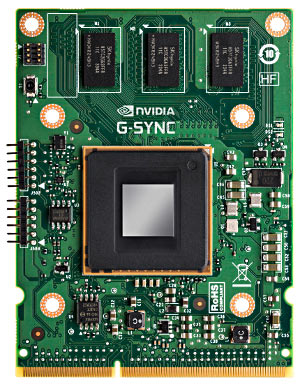
NVIDIA G Sync Circuit Board NVIDIA G-SYNC Technology: An In-Depth Look

NVIDIA G-SYNC Technology: An In-Depth Look

A very special new piece of hardware technology has recently been released at a conference in Montreal on October 22, 2013. The new technology is called G-SYNC, by NVIDIA. G-SYNC seems to be the answer for a major complaint from PC gaming community regarding image quality in fast-moving video games. Tears, stutters, and lag are told to be totally eliminated with this new technology. NVIDIA’s CEO Jen-Hsun Huang put on a compelling performance at the conference in Montreal this past Friday. He announced some exciting new technologies, GameStream, GeForce GTX 780 Ti, ShadowPlay, and of course, G-SYNC. In this article I will give you my explanation, thoughts and opinions on this new tech called G-SYNC.

Read more

NVIDIA G-SYNC Technology for Gaming Monitors Introduced

Tears, Stutters, Lag Become Artifacts of the Past Solving the decades-old problem of onscreen tearing, stuttering and lag, NVIDIA today unveiled NVIDIA G-SYNC™ technology which, for the first time, enables perfect synchronization between the GPU and the display. The result is consistently smooth frame rates and ultrafast response not possible with previous display technologies. Several years in the making, G-SYNC™ technology synchronizes the monitor’s refresh rate to the GPU’s render rate, so images display the moment they are rendered. Scenes appear instantly. Objects are sharper. Game play is smoother. “Our commitment to create a pure gaming experience led us to G-SYNC,” said Jeff Fisher, senior vice president of the GeForce business unit at NVIDIA. “This revolutionary technology eliminates artifacts that […]

Read more
NVIDIA Free-To-Play Bundle Now Offered

NVIDIA Free-To-Play Bundle Now Offered

Promotional Funds for Warframe, Neverwinter and Marvel Heroes NVIDIA today announced a new promotion that will give gamers a total of $75 of in-game currencies to a trio of the hottest free-to-play games: Warframe, Neverwinter and Marvel Heroes. The promotion, which is applicable for new purchases of notebook PCs featuring GeForce 700M-series GPUs or desktop GeForce GTX 650 GPUs, starts today and will run throughout the rest of the year. Voted the best F2P game at PAX East 2013, Warframe is a co-op third-person online action game set in an evolving sci-fi world. Featuring the incredible NVIDIA PhysX technology, players control ancient warriors in a war with the Grineer (bad guys). With over three million registered users, gamers can join […]

Read more
pax demo NVIDIA Delivers Gaming Excitement at PAX Prime 2013

NVIDIA Delivers Gaming Excitement at PAX Prime 2013

From August 30th to September 2nd, the NVIDIA booth will serve as the destination for hardcore gamers to get hands on time with the very latest PC game titles, the just-released SHIELD handheld gaming platform and get a chance to check out NVIDIA GRID, the latest in cloud gaming technologies. Top new games will be shown, such as Assassin’s Creed IV: Black Flag, Tom Clancy’s Splinter Cell: Blacklist, Dying Light, The Bureau: XCom Unlimited, Command & Conquer: Generals 2 and many more on PCs featuring the latest GeForce GTX GPUs. Gamers will also have a chance to play their favorite Android games on SHIELD, the hottest mobile gaming platform currently available, including Dead on Arrival 2 THD, Chuck’s Challenge, Virtua Tennis, Choplifter THD, Flyhunter: Origins and a ton more. NVIDIA will also be demonstrating the visual awesomeness of 4K with a special demo of Assassin’s Creed 4: Black Flag and Watch Dogs streamed to a 55-inch 4K Sony TV directly from SHIELD.

Read more

NVIDIA Brings Kepler Graphics Architecture to Mobile Devices

By NVIDIA This week at Siggraph, we’re giving a sneak peek at the GPU inside Project Logan, our next-generation, CUDA-capable mobile processor. From a graphics perspective, this is as big a milestone for mobile as the first GPU, GeForce 256, was for the PC when it was introduced 14 years ago. I am really excited to start showing it off to the world. GeForce 256 revolutionized PC graphics and created the GPU category, with its full workstation-class feature set and industry leading performance. Kepler delivers the same promise to mobile. It brings a huge jump in performance. It offers extraordinary power efficiency. And it provides full support for the modern GPU feature set found in the latest PC GPUs and […]

Read more

NVIDIA GeForce GTX 760 GPU Debuts

By NVIDIA NVIDIA today launched the new NVIDIA® GeForce® GTX™ 760 GPU, which offers amazing PC gaming performance, smooth frame rates and exclusive GeForce GTX features for only $249. Designed to deliver extreme frame rates for all of this year’s hottest PC games, includingCall of Duty: Ghosts, Watch Dogs and Battlefield 4, the GeForce GTX 760 GPU is the new weapon of choice for experiencing high-definition gaming. And, powered by an NVIDIAKepler™ architecture-based GPU with an incredible 2.3 gigaflops of processing horsepower, the GeForce GTX 760 is already dramatically more powerful than the next-generation game consoles expected by the end of the year. “For gamers seeking insanely fast performance and smooth frame rates for their favorite games, the choice is […]

Read more
NVIDIA GeForce GTX 760 Video Card Corner NVIDIA GeForce GTX 760 Graphics Card Review

NVIDIA GeForce GTX 760 Graphics Card Review

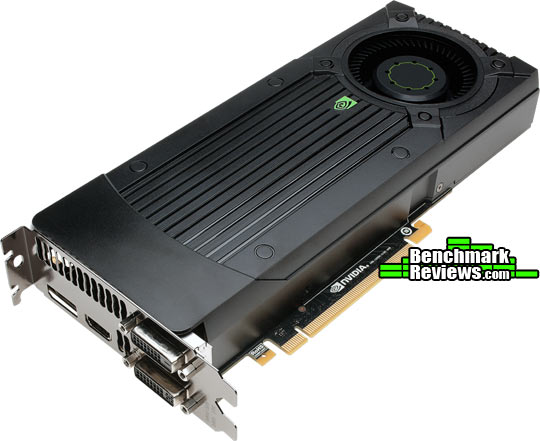
NVIDIA’s GeForce GTX 760 video card is built from the 28nm Kepler GK104 graphics processor, featuring 1152 CUDA cores that are clocked to reach 980 MHz and reach 1033 using NVIDIA Boost 2.0 technology. GeForce GTX 760 also comes with 2GB of GDDR5 video memory, clocked to provide a 1502 MHz graphics frame buffer. In this article, Benchmark Reviews tests and compares the NVIDIA GeForce GTX 760 graphics card using several highly-demanding DX11 video games, such as Metro: Last Light, Batman: Arkham City, and Battlefield 3.

Read more

NVIDIA GeForce GTX 770 Video Card Review

NVIDIA’s GeForce GTX 770 video card is built from the 28nm Kepler GK104 graphics processor, identical to the GTX 680 released back in March 2012. Featuring 1536 CUDA cores that are clocked to reach 1085 MHz using NVIDIA Boost 2.0 technology, GTX 770 also comes with 2GB of GDDR5 video memory that creates the world’s fastest 1753 MHz graphics frame buffer. In this article, Benchmark Reviews tests and compares the NVIDIA GeForce GTX 770 graphics card using several highly-demanding DX11 video games, such as Metro: Last Light, Batman: Arkham City, and Battlefield 3.

Read more

NVIDIA GeForce GTX 780 Graphics Card Review

NVIDIA’s GeForce GTX TITAN allowed gamers to challenge any video game they choose with the highest quality settings possible, but in limited supply and high price tag. For many players, their games really only needed half as much power and memory from a video card. Enter NVIDIA GeForce GTX 780: built from GTX TITAN to deliver 3GB of GDDR5 video frame buffer memory, and 2304 CUDA cores from the GK110 GPU that reach 900 MHz using NVIDIA Boost 2.0 technology. In this article, Benchmark Reviews tests and compares the NVIDIA GeForce GTX 780 graphics card using several highly-demanding DX11 video games, such as Metro: Last Light, Batman: Arkham City, and Battlefield 3.

Read more

NVIDIA GeForce GTX 650 Ti BOOST Video Card Review

With the economy on the rebound, gamers are coming out of hibernation with a hunger for modern DirectX11 graphics and realism. Since AMD has all but disappeared from the scene, NVIDIA has timed their affordable mainstream video card launch perfectly. Based on the NVIDIA Kepler GK106 architecture, the GeForce GTX 650 Ti BOOST delivers 2GB of 1502 MHz GDDR5 memory and 768 CUDA Cores operating at 980 MHz up to 1033+ with NVIDIA GPU Boost technology. In this article, Benchmark Reviews tests the NVIDIA GeForce GTX 650 Ti BOOST graphics card using several highly-demanding DX11 video games.

Read more

NVIDIA SLI Performance: GeForce GTX 660 Ti vs GTX 670

Back in May (2012) NVIDIA released their $400 GeForce GTX 670 video card, securing the number two position in their single-GPU product stack. Just three short months later, the GeForce GTX 660 Ti graphics card arrived to market and filled store shelves at the $300 price point. With a substantial $100 price difference between these two product, consumers might (incorrectly) presume there’s a significant difference in hardware or performance. To the surprise of many, the GeForce GTX 670 and GTX 660 Ti are nearly the same card. Both feature identical 28nm NVIDIA ‘Kepler’ GK104 graphics processors, complete with 1344 CUDA cores all clocked to identical 915 MHz core and 980 Boost speeds. Additionally, the GTX 670 and GTX 660 Ti also feature the exact same 2GB GDDR5 video memory buffer, clocked to 1502 MHz on both cards. The only physical difference between these two products resides in the memory subsystem: GeForce GTX 670 receives four 64-bit controllers (256-bit total bandwidth) while GeForce GTX 660 Ti is designed with three memory controllers (192-bit bandwidth). So does this amount to any real differences in video game performance?

Read more